Keep your room cool. Avoid screens before bed. No coffee after 2pm.
You've heard it all. You've tried it all. You're still not sleeping well.
Here are 5 things that actually make a difference. Based on research, not what the internet keeps recycling.
1. Lock your wake time. Stop obsessing about bedtime.
Your wake time is what sets your body clock. Not your bedtime.
The moment you wake up and see light, your brain calibrates everything: cortisol, melatonin, body temperature, hunger. Sleeping in on weekends basically gives you jet lag every Monday.
Pick a wake time. Stick to it 7 days a week. Let bedtime float. Within 2 to 3 weeks your body figures out when to get sleepy on its own.
This is free. It requires nothing. And it's one of the most effective things on this list.
2. Get outside within an hour of waking.
Not through a window. Actual outdoor light. Even 10 minutes.
Your eyes have special cells that detect natural daylight. When they fire in the morning, they start a countdown. Roughly 14 to 16 hours later, your body begins its evening wind-down.
Skip the morning light and that countdown starts late. You don't feel sleepy at 10pm. You push bedtime later. Wake up tired. Skip the morning light again. Repeat.
A morning walk with your coffee might be the single most effective thing you can do for tonight's sleep.
3. Your last meal is a sleep decision.
Eating within 2 hours of bed forces your body to prioritise digestion when it should be shifting into repair mode. Blood sugar spikes and then crashes. That crash is one of the main triggers for the classic 3am wake-up.
Finish your last real meal 2.5 to 3 hours before bed. If you need something later, go for protein and fat over carbs. A handful of nuts, some cheese. They don't cause the same disruption.
Nobody talks about this because there's nothing to sell. But for many people, moving dinner 90 minutes earlier does more than any supplement.
4. The 90-second nervous system reset.
There's a specific breathing pattern studied at Stanford that mechanically switches your nervous system from alert mode to rest mode. It's called physiological sighing.
How it works: Breathe in through your nose. Before you exhale, take a second shorter inhale on top (your lungs expand a little more). Then exhale slowly through your mouth, making the out-breath twice as long as the in-breath.
One cycle takes about 10 seconds. Do 6 of them in bed with the lights off. Most people feel something shift within the first 3 breaths.
It's not a mindset trick. It's a mechanical switch. And it's free.
5. Give your body what it burns through at night.
Tips 1 to 4 are free and they work. But here's what most people miss.
Your brain doesn't shut off during sleep. It runs the most intensive maintenance shift of the day: clearing waste, repairing cells, rebuilding neurotransmitters, consolidating memories. All of that needs raw materials. And most people are running low.
Stress depletes magnesium and zinc fast. Modern diets don't replace them fast enough. Without these minerals, your brain simply can't execute the repair work that sleep exists for. You can have perfect sleep habits and still wake up tired because your body is working with empty hands.
This is why we built NOX. Not as a replacement for good habits. As the foundation that makes good habits work.
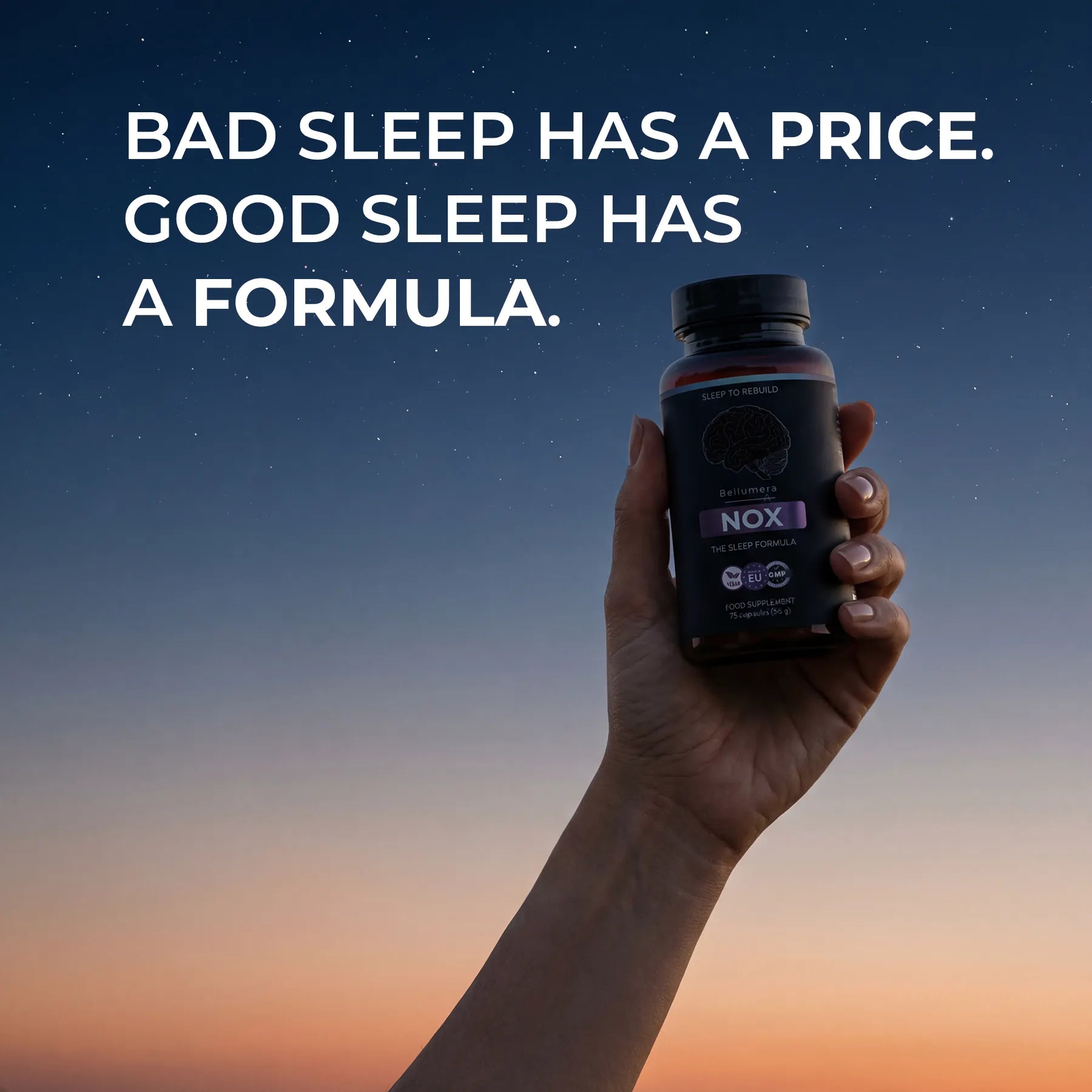
Calm your nervous system before bed. Saffron extract, Lemon Balm, and Myo-inositol support real relaxation. Think of it as the supplement version of tip 4.
Stay in deep sleep through the night. Valerian root and Reishi mushroom help you sleep through the transitions that normally wake you up.
Replenish what your brain burns through. Magnesium Bisglycinate, Zinc, Vitamins C and E, Selenium. The raw materials for overnight repair.
11 compounds. Each one at a dose backed by research. No melatonin, because melatonin shifts when you feel sleepy, not how well you actually sleep.
Tips 1 to 4 are free. Tip 5 is about giving your body the raw materials so everything else works better.
Sleep isn't just about falling asleep. It's when your body rebuilds. And it can't rebuild with empty hands.
What people are saying
⭐⭐⭐⭐⭐ "I was already doing everything right. Good habits, no screens, early dinner. NOX was the missing piece." — Sophie D. 🇫🇷
⭐⭐⭐⭐⭐ "Sleeping through the night without waking up once. I forgot that was even possible." — Marco T. 🇮🇹
⭐⭐⭐⭐⭐ "Week two and my wife noticed before I did. Apparently I'm a different person when I actually sleep." — Daan V. 🇳🇱
First time? Use code ZZZ for 10% off
Apply at checkout · Valid on your first order